



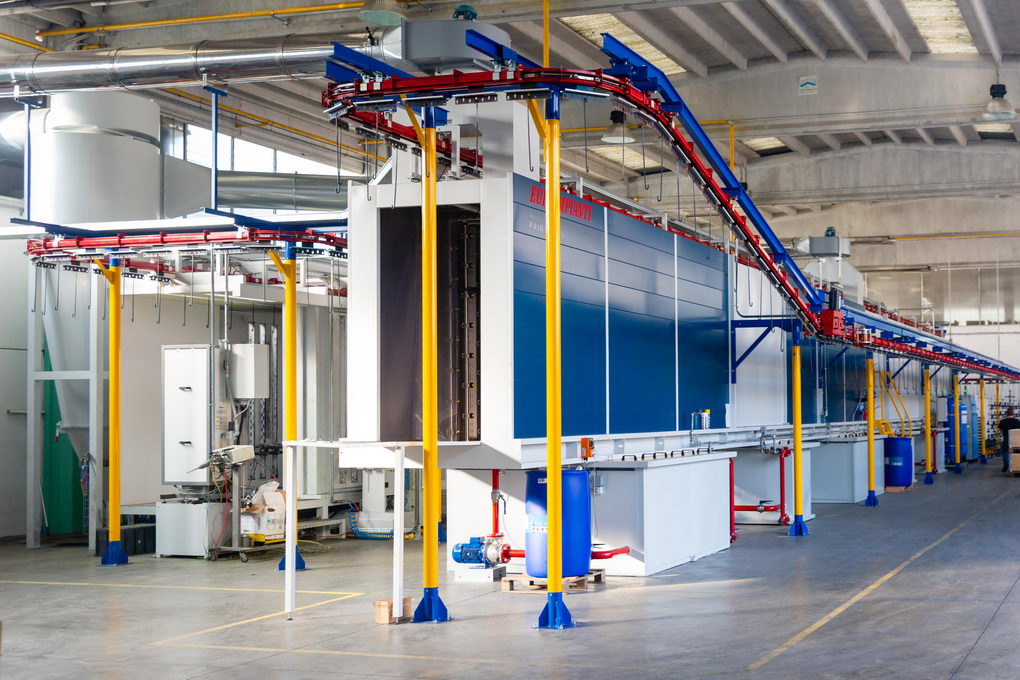
Rapid order cycles and tight delivery windows push finishing lines to perform without hesitation. High-volume powder coating demands equipment that maintains heat, airflow, and part movement even during peak output hours. Selecting the right powder coating systems requires careful evaluation of capacity, structural strength, and thermal consistency under real working conditions.
Match System Capacity to Your Busiest Production Shifts
System capacity should reflect the highest daily demand, not the average workload. An industrial powder coating oven sized only for moderate output may struggle when large batches move through the line at once. Conveyor length, chamber dimensions, and burner capacity must support the busiest shift of the week. Capacity planning becomes more accurate when reviewing part counts per hour and rack density. Powder coating equipment for sale often lists theoretical throughput, but real output depends on how densely parts are loaded and how quickly they travel through powder curing ovens. Aligning system size with peak demand prevents bottlenecks that slow overall powder coating operations.
Prioritize Ovens with Airflow Built for Dense Loads
Dense part loads restrict air circulation if airflow systems are undersized. Powder coating ovens designed for heavy volume must include strong recirculation fans and well-planned ducting to move heated air through tightly packed racks. Airflow performance determines how evenly heat spreads across coated surfaces. Systems with balanced air velocity reduce cold spots and help maintain consistent cure quality even when racks are filled to capacity. Strong airflow design ensures powder coating systems maintain temperature stability throughout the entire industrial powder coating oven chamber.
Choose Conveyors That Handle Weight Without Slowing Down
Conveyors carry coated parts from the spray area into powder curing ovens. High-volume finishing lines require conveyor systems built for continuous motion under significant weight loads. Heavy racks and oversized parts increase strain on chains, trolleys, and drive motors. Durable conveyor construction allows powder coating equipment to maintain steady travel speed without hesitation. Reliable movement ensures each part remains inside the powder coating oven for the correct curing time, supporting consistent powder coating results across long shifts.
Look for Controls That Stabilize Heat Under Heavy Use
Temperature stability separates dependable powder coating systems from average installations. Digital controls must respond quickly when chamber heat fluctuates due to door openings or high part density.
Responsive control systems adjust burners or heating elements to maintain setpoint temperatures inside the industrial powder coating oven. Advanced controllers prevent temperature swings that could compromise finish durability. Stable heat management keeps powder curing ovens operating within proper cure ranges, even during sustained high-volume runs.
Select Chambers That Ease Loading of Large Parts
Loading efficiency influences overall line speed. Powder coating ovens built with wide door openings and generous chamber space allow operators to position large parts without delay.
Spacious chambers also improve airflow around complex shapes. Larger access areas reduce the time required to load and unload racks, supporting faster turnaround. Well-designed chambers contribute to smoother workflow inside powder coating equipment packages designed for high-volume operations.
Verify Parts Hangers Support the Shapes You Coat Most
Parts hangers must securely support the specific shapes processed most often. Inadequate hanger design can cause parts to shift or tilt during movement through powder coating systems.
Stable hanging systems improve coating coverage and airflow access. Properly designed supports allow powder coating ovens to cure irregular shapes evenly. Consistent positioning helps maintain reliable powder coating quality regardless of part geometry.
Favor Systems with Serviceable Components for Uptime
High-volume operations leave little room for extended downtime. Powder coating equipment built with accessible service points allows technicians to inspect burners, fans, and conveyors quickly.
Ease of maintenance directly impacts uptime. Systems that allow fast component replacement reduce interruptions in powder curing ovens. Serviceable design features help maintain continuous output while minimizing unexpected delays.
Ensure Heaters Maintain Target Temperature Under Load
Heating systems must sustain curing temperatures even when large metal loads absorb significant thermal energy. Industrial powder coating oven burners or electric elements should deliver sufficient output to recover heat quickly after fresh racks enter the chamber.
Heat recovery performance affects overall cycle time. Undersized heating systems may struggle to maintain consistent curing temperatures during heavy operation. Selecting powder coating equipment with properly rated heaters ensures stable temperature control across extended production periods.
Check That Controls Track Cure Time and Temp Precisely
Accurate time and temperature tracking confirms that coatings receive proper thermal exposure. Modern powder coating systems integrate programmable timers and digital displays to monitor cure cycles precisely.
Data tracking also supports quality assurance efforts. Systems capable of recording cure temperature and dwell time help verify that each batch meets required specifications. Reliable monitoring within powder coating ovens strengthens consistency and builds confidence in finished products.
Experienced equipment manufacturers often guide facilities through the process of selecting high-volume powder coating equipment tailored to their workload. Complete powder coating equipment packages frequently include industrial powder coating ovens, durable conveyors, and integrated powder curing ovens designed for continuous output.
Trusted suppliers such as Reliant Finishing Systems provide powder coating equipment engineered for reliable throughput, stable curing performance, and long-term finishing efficiency in demanding production environments.
